
 IT
IT  EN
EN 
Penelope era una tessitrice visionaria che trasformò l’unica forma di espressione concessa alle donne in un atto di resistenza. Lontana dall’attendere passivamente il ritorno del marito, usò il suo telaio per sovvertire l’ordine costituito, affermando il controllo sul proprio tempo e sul proprio destino.
La mostra Penelope. Her Journeys, restituisce la sua storia ponendo la voce femminile al centro.
Per le artiste Gayle Chong Kwan, Stephanie Blake e Kimiko Yoshida, Penelope non è un simbolo di obbedienza, ma una donna in cerca di libertà, di spazio creativo e di identità; un’artista che trasforma la vita in linguaggio.
Le loro interpretazioni rivelano una figura sfaccettata, la cui lotta rispecchia quella di molte donne e artiste di oggi. In questo racconto, le mura di Palazzo Bonvicini non sono più un vincolo domestico, ma un luogo di potere creativo. Penelope non tesse più in silenzio; parla, agisce e plasma il proprio mito, una nuova mitologia che risuona con le voci di tutte le donne.
GAYLE CHONG KWAN
THE LOTUS EATERS
Penelope incarna il ruolo della padrona di casa in cui l’ospitalità viene rovesciata e imposta su di lei, una condizione in cui il ruolo domestico e lo spazio stesso sono posti sotto assedio continuo.
La pressione costante sotto cui vive ha l’effetto di trasformarla in una donna che si aggrappa ostinatamente al passato e trova sollievo e conforto solo nel mondo del sonno e dei sogni, anche se persino quelli possono essere dolorosi per lei.[1]
Chong Kwan prende le idee classiche e tradizionali di domesticità e dello spazio domestico e, sotto le sembianze di un mondo onirico, le trasforma in difesa, astuzia, tattica e battaglia. L’opera fonde fuga, memoria e resilienza in approcci materiali, virtuali e performativi.
The Lotus Eaters è un’installazione che si muove tra scultura, tessuto, processioni e un paesaggio VR in movimento. I tessuti sospesi fungono anche da mantelli indossabili, e pali che portano utensili da cucina e forme in stoffa vengono utilizzati nelle performance di processioni rituali. L’opera di Chong Kwan riflette la casa sia al tempo stesso un campo di battaglia e una fonte di forza. Rilegge il tema di xenia (ospitalità sacra) attraverso la prospettiva di Penelope, delle sue ancelle e dei suoi incontri con i 108 pretendenti, mediante versioni surreali di oggetti e immagini domestici, culinari e legati alla casa.
[1] Jones, Peter, Introduzione a Omero Odissea, p. xxiii, Penguin Classics.
STEPHANIE BLAKE
PENELOPE, THE STORYTELLER
L’installazione firmata dall’illustratrice, artista e autrice Stephanie Blake è definita principalmente da un’unica scrivania, una scultura su uno sgabello e una macchina da scrivere; un allestimento austero che mette in primo piano l’atto stesso dello scrivere. Seduta alla scrivania, una figura in bronzo (self-?), ritratto di Penelope, diventa Omero attraverso l’atto stesso della narrazione. Nell’interpretazione di Blake, questa identificazione si spinge oltre: Penelope non è soltanto colei che racconta, ma colei che crea il mito, che lo plasma e lo trasmette, assumendo il ruolo dell’autrice e dell’autorità narrativa: l’artista stessa coincide con Penelope, annullando la distanza tra autrice, narratrice e protagonista. L’atto della scrittura diventa così al tempo stesso performativo e autobiografico, collocando l’opera dentro il gesto stesso che mette in scena.
Ciò che un tempo era un poema orale viene qui trasformato in un testo scritto, spostando l’origine dell’ Odissea dalla voce collettiva a un’autorialità intima. Per Blake, l’incertezza che circonda l’identità di Omero apre uno spazio speculativo: Omero viene immaginato come la stessa Penelope, che si riappropria del racconto scrivendolo dall’interno. L’autorialità diventa così un atto di resistenza, un’affermazione silenziosa ma radicale della propria autonomia, compiuta nella tranquillità della propria casa.
Dal frastuono della macchina da scrivere emerge un flusso continuo di onde blu che si riversano nella stanza. Su questa superficie fluida si dispiegano visioni: mari in tempesta, venti impetuosi e tuoni che rotolano nel cielo. Le onde, come le parole, si propagano verso l’esterno, riempiendo lo spazio e dissolvendo il confine tra linguaggio e paesaggio, tra interno ed esterno.
Nonostante il suo apparente movimento, l’installazione evoca un profondo senso di sospensione. Il flusso incessante richiama la tessitura e la disfazione perpetue di Penelope, così come il destino di Itaca tenuto in sospeso. Il ritmo oscillante del telaio trova il suo eco nella struttura narrativa dell’ Odissea stessa: una storia definita non da una progressione lineare, ma dal ritorno ciclico, dal rinvio e dalla ripetizione, in cui Ulisse avanza solo continuando a muoversi avanti e indietro.
KIMIKO YOSHIDA
APRÈS LE MASSACRE, LA RÉCONCILIATION
In Après le Massacre, la Réconciliation, Kimiko Yoshida trasforma la figura leggendaria di Penelope in una virtualità poetica in cui convergono mito, violenza e riconciliazione. Penelope è descritta come la riconciliante per eccellenza, che guida il ritorno dell’eroe assente e la ricomposizione dei legami spezzati nel corso del tempo.
L’installazione combina elementi visivi, spaziali e performativi per evocare i ritmi dell’attesa, del ritorno e della riunione. Un lampadario in vetro di Murano rosa, Colpo di Vento. Le retour d’Ulysse, sospeso sopra il tavolo da pranzo, il cui delicato colore riecheggia sia la rosa ibrida dal profumo di muschio Penelope, coltivata dal reverendo Joseph Pemberton nel 1924, e la bellezza effimera dei sakura[1].
Nella dimensione performativa, l’artista metterà in scena lungo il 2026 Le Dîner de Réconciliation, invitando un numero selezionato di ospiti a prendere parte al Menu of Reunion. Qui, l’esperienza culinaria di Yoshida diventa una forma d’arte: la tavola si trasforma in un palcoscenico, il pasto condiviso in un atto intimo di riconciliazione. In questo rituale, l’artista stessa coincide con Penelope, facendo collassare i confini tra protagonista, anfitriona e autrice, e situando l’opera nel gesto stesso che essa compie. Attraverso questo intreccio di spazio, rituale e narrazione, Après le Massacre, la Réconciliation medita sulla delicata coreografia dell’ospitalità, dell’attesa e del ritorno di ciò che è stato a lungo atteso, un’assenza resa presente attraverso l’esperienza performativa e sensoriale.
[1] fiori di ciliegio
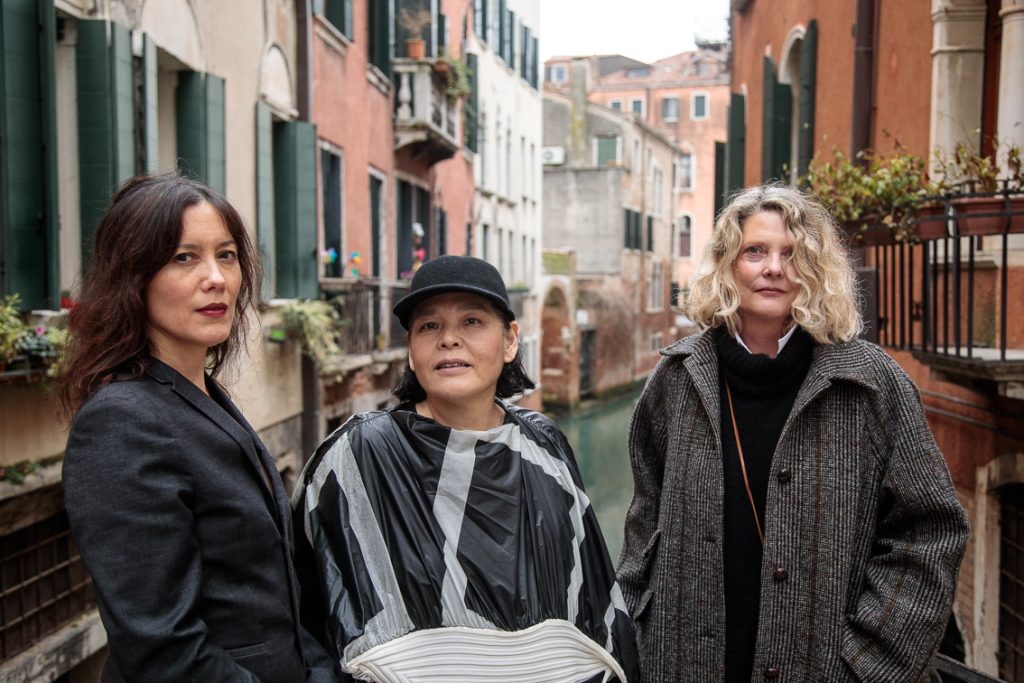
GAYLE CHONG KWAN – KIMIKO YOSHIDA – STEPHANIE BLAKE